While the Colosseum and the Vatican grab the global headlines, between the Tiber River and the Capitol Hill in the heart of th city, the Rome’s Jewish Ghetto is one of the city’s most atmospheric and culturally rich neighborhoods. Founded in 1555, it is the oldest Jewish ghetto in the Western world and today blends deep history, remarkable architecture, and unforgettable food.
Whether you’re a first-time visitor of the Eternal City or a returning traveler, this small area – only two blocks – offers an authentic Roman experience with a unique soul. away from the tourists traps.
A brief history of the Jewish Ghetto in Rome
Rome’s Jewish community is one of the oldest in Europe, dating back over 2,000 years. The ghetto was officially established in the 16th century under Pope Paul IV, forcing Jewish residents into a confined area that was often flooded by the Tiber.
Despite centuries of hardship, the community preserved its traditions, cuisine, and identity. Walking through the ghetto today means stepping into a living piece of Roman and Jewish history.
What to see in Rome’s Jewish Ghetto: the Great Synagogue
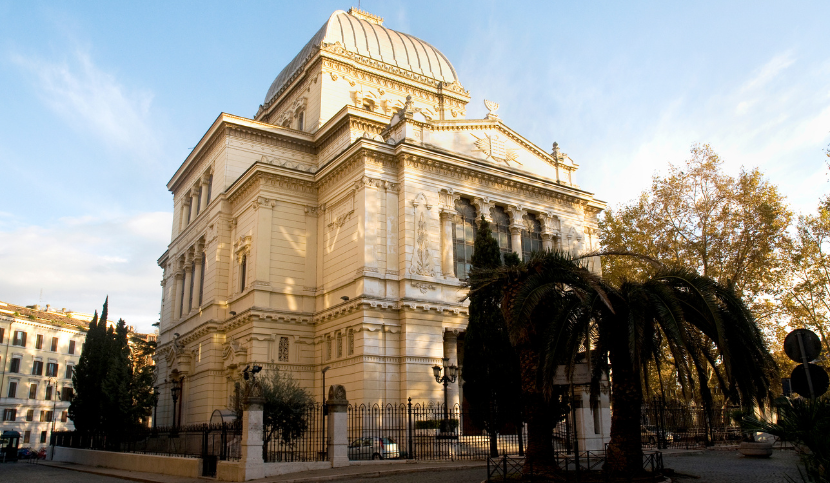
The Great Synagogue (Tempio Maggiore) is the neighborhood’s most iconic landmark. Built in the early 20th century after Jewish emancipation, its squared aluminum dome stands out against Rome’s skyline. Inside, the Synagogue and the Jewish Museum of Rome offer powerful insights into Jewish life, traditions, and history in the city.
Portico d’Ottavia
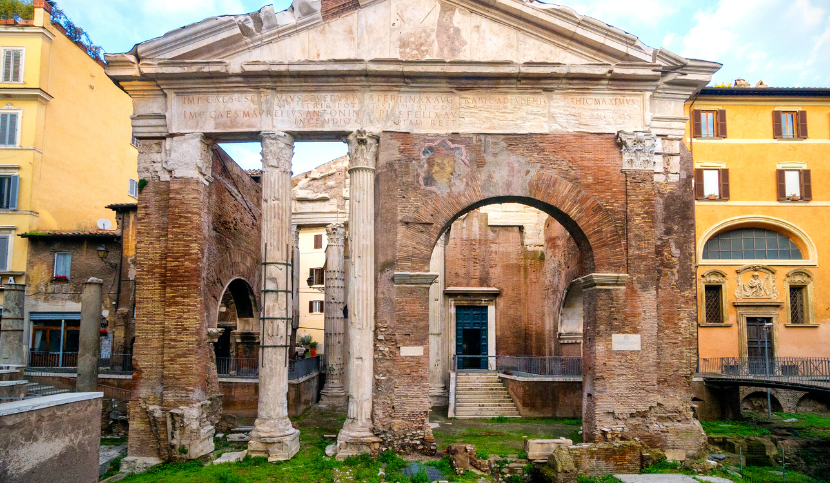
Just outside the synagogue area, the Portico d’Ottavia is an ancient Roman structure that later became the symbolic entrance to the ghetto. Built by Emperor Augustus later served as a medieval fish market today the Portico d’Ottavia serves as the dramatic entrance to the neighborhood, where giant Corinthian columns stand as silent witnesses to centuries of change. This layered monument—Roman, medieval, and modern all at once—is a must-see for all history lovers.
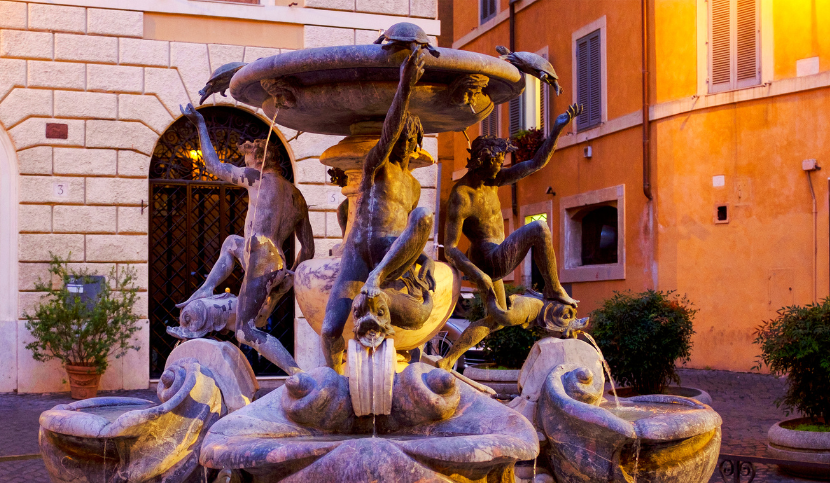
The turtles fountain
Located in the charming Piazza Mattei, this is arguably Rome’s most graceful fountain. Legend says it was built in a single night. While the bronze youths and dolphins are original 16th-century works, the tiny bronze turtles were added later, some legends say by the great Bernini himself.
The “Stolpersteine”
As you wander the cobblestones (called sanpietrini), look down. Throughout the ghetto you will notice small brass plaques embedded in the pavement. These are Stolpersteine – stumbling stones or pietre d’inciampo in Italian (Find out more here).
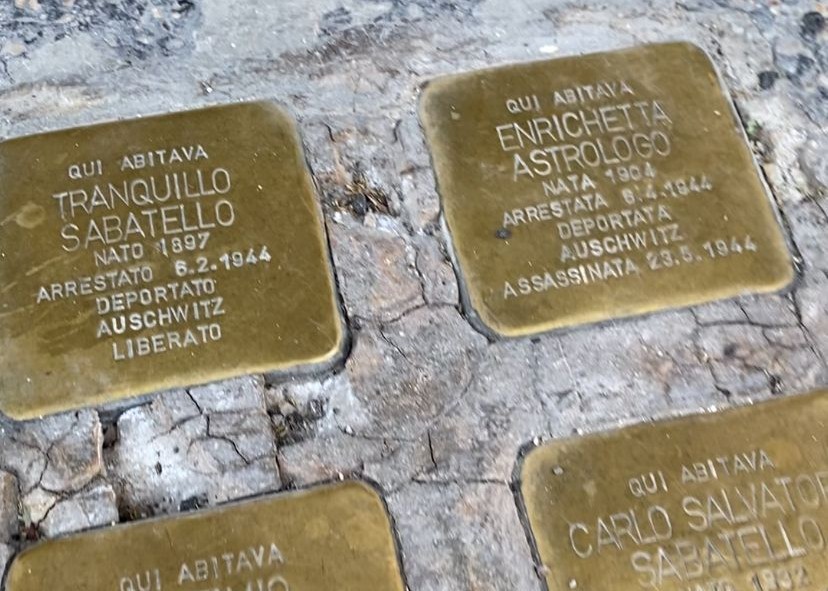
They commemorate the residents who were deported during the Holocaust in the Second World War.
The Rome’s ghetto roundup happened on the 16th of October 1943.
It’s a powerful, quiet reminder of the neighborhood’s resilience.
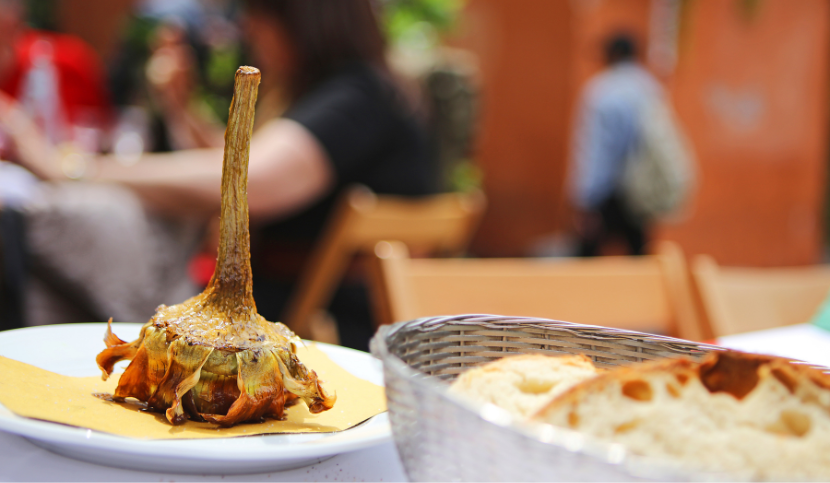
A culinary pilgrimage
Roman-Jewish cuisine (Cucina Ebraico-Romanesca) is the “soul food” of Italy, one of the most authentic and oldest Italian regional cuisine. It’s seasonal, hearty, and strictly follows the rules of the season.
- Carciofi alla Giudia: This is the undisputed king of Roman cuisine. A Jewish-style artichoke, deep-fried twice until it opens like a golden rose and tastes like savory chips.
- Fried Cod (Baccalà): Crispy, salty, and perfect for a street-side food.
- Torta di Ricotta e Visciole: Visit the famous Boccione bakery (look for the tiny door with no sign) for this burnt-crust cheesecake filled with sheep’s milk ricotta and sour cherries.
How to Reach the Jewish Ghetto
The Jewish Ghetto is located in the Rione Sant’Angelo, in the heart of Rome’s historical city center making it incredibly central and easy to reach on foot from many major landmarks. By foot: It’s a 10-minute walk from Piazza Venezia or Campo de’ Fiori, by bus heading toward Piazza Venezia or Largo di Torre Argentina (lines 40, 64, 70, 87, and 492 are common), from Argentina, it’s a 5-minute walk south, by tram line 8 stops at Arenula/Min. G.Giustizia, just steps from the heart of the district.
With only two blocks rich in stories, flavors, and culture, Rome’s Jewish Ghetto offers a deeper, more intimate look at the Eternal City. It’s a place where ancient ruins, living traditions, and incredible food come together and it is an unmissable stop for any travelers seeking something beyond the usual tourist tours.