Discover with us what to do and see during a weekend or 3 days in Rome: follow our itinerary to experience the best of the Eternal City and embrace the Roman way of life.

Famous for its history, monuments, and great beauty, Rome is a treasure trove of art, architecture, and vibrant culture. With over 27 centuries of history, the Eternal City has so many things to discover during a weekend or 3 days in Rome. From the Vatican to the Colosseum, Villa Borghese, and the Spanish Steps, the city offers plenty of places to visit.
But with only three days, early booking and careful planning are essential. A weekend might seem short, but with a well-planned itinerary, you can experience the best of what the Eternal City has to offer.
Follow our ultimate guide on what to do during a weekend in Rome—a perfect blend of iconic landmarks, delicious food, and authentic Roman experiences.
Day 1: a jump into ancient Roman history
Morning: the Colosseum and Roman Forum
One of the most iconic and famous monuments in the world, the Colosseum is the ancient arena where gladiators once fought for their lives. It is one of the Seven Wonders of the Modern World, a must-see during a tour of 3 days in Rome. We recommend arriving early to avoid the crowds and buying tickets in advance to explore this magnificent amphitheater from the inside.
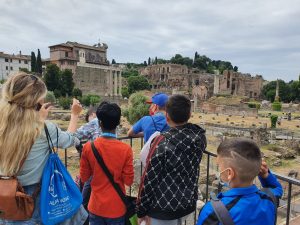
Just a short walk away lies the Roman Forum. The best way to discover this incredible archaeological site is by wandering through the ruins of ancient temples, grand arches, and basilicas. Imagine the hustle and bustle of Rome’s political and social center thousands of years ago. For a deeper understanding, we suggest booking a guided tour to hear the fascinating stories behind these relics.
Afternoon: Palatine Hill and Capitoline Museums
After a morning exploring the glorious ancient history of the Eternal City, the afternoon is the perfect time to head to Palatine Hill, one of Rome’s seven hills and the legendary birthplace of the city. The panoramic views from the hill are breathtaking, offering glimpses of the Colosseum and the Roman Forum below. A leisurely stroll through lush gardens and ancient ruins that once housed emperors is the best way to conclude your exploration of ancient Rome.
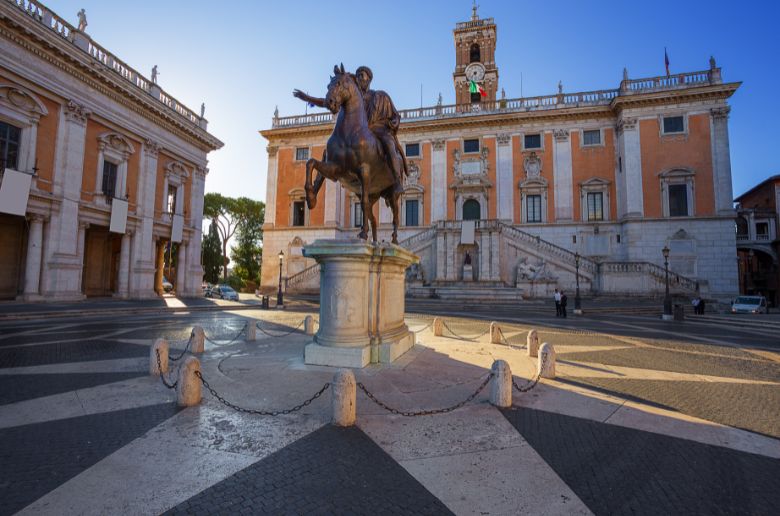
Later in the afternoon, visiting the Capitoline Museums is a wonderful way to admire the most important collection of Roman archaeology, featuring stunning classical sculptures, Renaissance art, and ancient Roman artifacts. The museums are housed in two palaces at Piazza del Campidoglio, designed by Michelangelo, offering both cultural enrichment and stunning architectural beauty.
Evening: aperitif time at the Spanish Steps
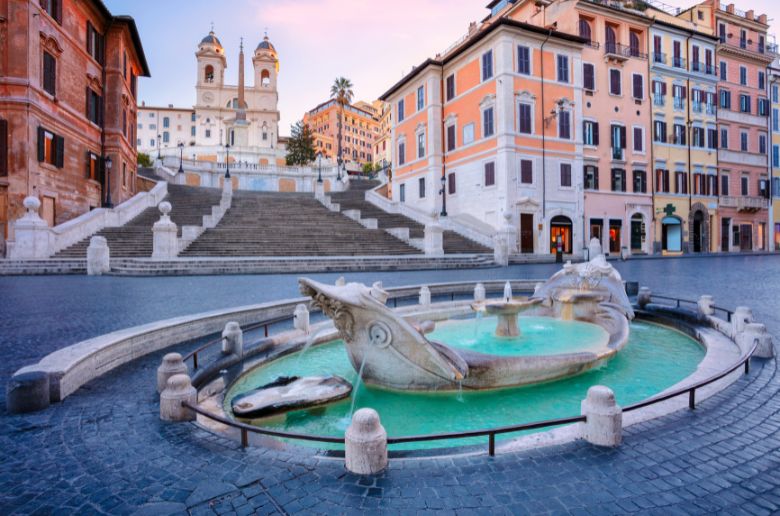
As the afternoon draws to a close, it’s time to visit one of the most famous monuments in the world and one of Rome’s most picturesque spots: the Spanish Steps. Climbing to the top offers the chance to admire an incredible sunset view over the rooftops and domes of the Eternal City. This is also the perfect spot to relax and people-watch, as Piazza di Spagna buzzes with energy. As evening falls, enjoy the Italian ritual of an aperitif by sipping an authentic spritz in one of the nearby bars, followed by a casual stroll around the fashionable streets of Via Condotti.
Day 2: embracing Roman religion, art, and cuisine
Morning: Vatican Museums and Saint Peter’s Basilica
No trip to Rome is complete without a visit to the smallest state in the world, located in the heart of the city: Vatican City, home to the Vatican Museums and St. Peter’s Basilica. The Vatican Museums are simply stunning, boasting one of the most impressive art collections in the world. We recommend arriving early to avoid the crowds and explore an art lover’s paradise, including the Sistine Chapel, Michelangelo’s masterpiece, and the Raphael Rooms, painted by the Renaissance artist Raphael.
Afterward, visit the monumental masterpiece and one of Rome’s most iconic landmarks: St. Peter’s Basilica, the largest church in the world. Its sheer size and grandeur leave visitors speechless, thanks to the immortal masterpieces housed inside: Michelangelo’s celebrated Pietà, the bronze canopy created by Gian Lorenzo Bernini, and the breathtaking dome—another Baroque masterpiece by Michelangelo.
Afternoon: Castel Sant’Angelo and Piazza Navona
After lunch, a visit to Castel Sant’Angelo is well worth it. Originally built as a mausoleum for Emperor Hadrian, this historic fortress offers insight into the link between ancient Rome and the Papal State. Over the centuries, it has also served as a papal residence and, at times, a prison. From the top of the castle, it can enjoy another stunning view of the city.

Afterward, a ten minute walk is Piazza Navona, the best way to discover Rome’s Baroque history. With Bernini’s famous masterpiece, the fountain of the Four Rivers, this beautiful square is brimming with fountains, street artists, and cafés. After visiting the Church of Sant’Agnese in Agone, designed by architect Francesco Borromini, Piazza Navona is the perfect spot to grab an espresso and unwind before continuing your Roman adventure.
Now it’s time to walk to one of Rome’s most iconic landmarks, the breathtaking Trevi fountain, located in the heart of the old city center. Throwing a coin into the fountain is a must-do during a visit to Rome; according to popular legend, it guarantees a return to the eternal city.
Evening: a Roman farewell in Campo de’ Fiori
Campo de’ Fiori is a beautiful location for a farewell evening. Enjoy a spritz or a glass of wine while sitting in one of the Eternal City’s most iconic squares. Campo de’ Fiori is a vibrant nightlife hub, and sipping an aperitif at an outdoor café, surrounded by Baroque palaces, is the perfect way to end an unforgettable weekend in Rome.
Day 3: where modern Rome meets timeless charm
Morning: Villa Borghese Gardens and Borghese Gallery
The last day of your weekend in Rome can start with a peaceful escape to the Villa Borghese Gardens, one of Rome’s largest green spaces. Rent a bike, row a boat on the picturesque lake, or simply enjoy a leisurely walk amidst the beautiful gardens. Inside the villa is an unmissable site: the Borghese Gallery, an art museum housed in a stunning villa featuring one of the most incredible collections in the world, with masterpieces by Bernini, Caravaggio, and Raphael. To enjoy your visit, we recommend booking tickets in advance, as entry is limited to timed slots.
Afternoon: explore Monti district and Basilica of San Clemente
For lunch, Monti is the perfect district to experience modern Roman culture while still being close to the city’s ancient past. This trendy neighborhood offers a mix of boutique shops, galleries, and hip cafés, making it a great place to discover local artisans and enjoy fresh, organic meals.
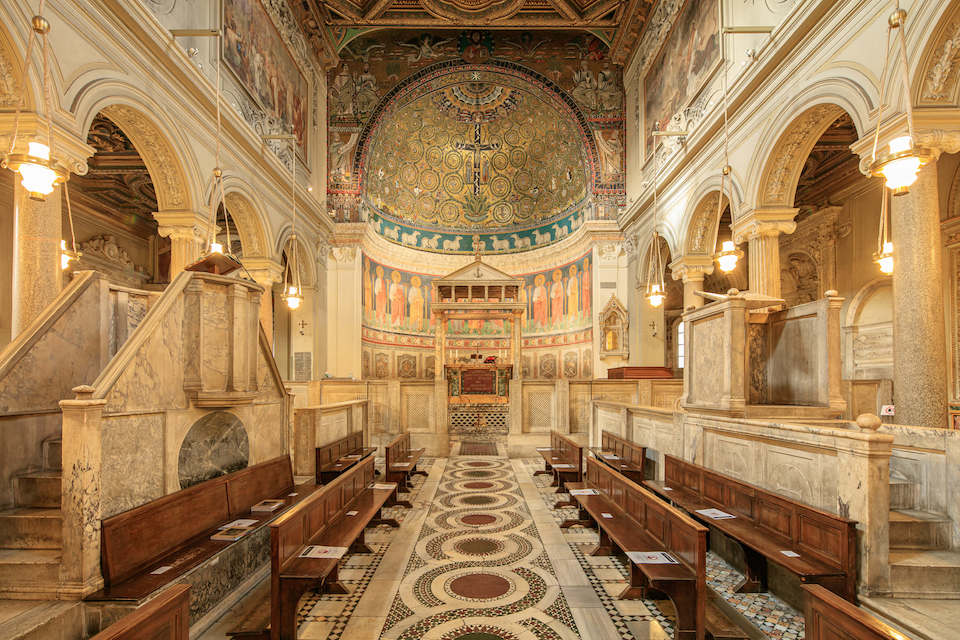
In the afternoon, visit the Basilica of San Clemente, a lesser-known hidden gem. This fascinating church is built on three levels, each one older than the last, showcasing Rome’s incredible layers of history. The lowest level contains an ancient Roman house, while the upper levels feature intricate mosaics and frescoes.
Evening: A Roman dining experience in Trastevere
To conclude the weekend in Rome, Trastevere is the best place for a classic Roman dinner. This is a lively neighborhood filled with traditional trattorias.
The restaurants and hostarie here are among the best in Rome for tasting hearty Roman dishes like Cacio e Pepe (pasta with cheese and pepper), Saltimbocca alla Romana (veal with prosciutto), and, of course, a glass of fine Italian wine. End your meal with a delicious tiramisù or ricotta e visciole (ricotta and sour cherry tart).