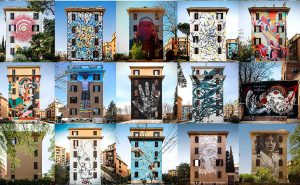
Follow our 5 stages to discover unconventional places in Rome—a unique way to escape the crowds while still experiencing the majesty of the Eternal City.
Rome is world-famous for its iconic monuments, boasting a history of over 30 centuries. The city is home to masterpieces that many travelers dream of visiting at least once in their lifetime. However, as a top travel destination, Rome’s most famous landmarks – such as the Colosseum, the Vatican, the Spanish Steps, the Pantheon, and the Trevi Fountain – can be often crowded, making it difficult to enjoy them peacefully.
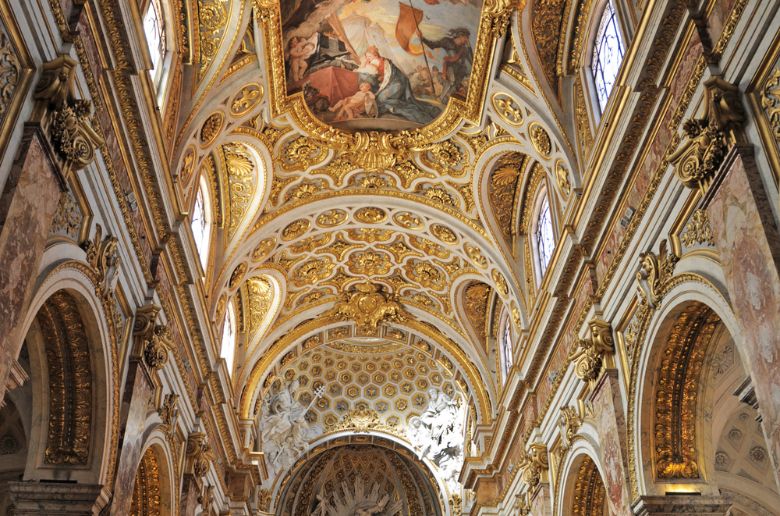
For this reason, here are 5 stages to explore some of Rome’s lesser-known treasures, offering a different perspective on the Eternal City’s historical majesty. Let’s discover them together!
Forma Urbis Museum, an ancient Google Maps in stone
Located on Celio Hill, one of the seven hills that formed the original core of ancient Rome, the Forma Urbis Museum is a hidden archaeological gem. Opened in 2024, it houses a remarkable marble map of ancient Rome, engraved on 150 marble slabs. Dating back to the 3rd century AD, this extraordinary artifact is often referred to as an “ancient Google Maps” but carved in stone.
A fragmented puzzle that historians are still piecing together, it provides a fascinating glimpse into the heart of Imperial Rome. Visitors can walk over this stunning archaeological map, which is protected by a glass floor. Originally located in the Temple of Peace, the map was later incorporated into the Santi Cosma e Damiano complex.
Basilica of Santi Cosma e Damiano and its golden mosaic
One of the oldest churches in Rome, the Basilica of Santi Cosma e Damiano is located near the Colosseum, within the Roman Forum—the most sacred and historically significant site of ancient Rome. Originally built as a Roman temple in the early 4th century AD, it was converted into a Christian church in the 6th century.
The basilica is adorned with magnificent golden mosaics in the apse (you can admire it here), featuring a stunning blend of Roman-Byzantine art. Over the centuries, the church has undergone various renovations. Pope Urban VIII introduced Baroque architectural elements, including the lantern and bell tower, adding to its architectural charm.
Saint Louis of the French church with its three Caravaggio
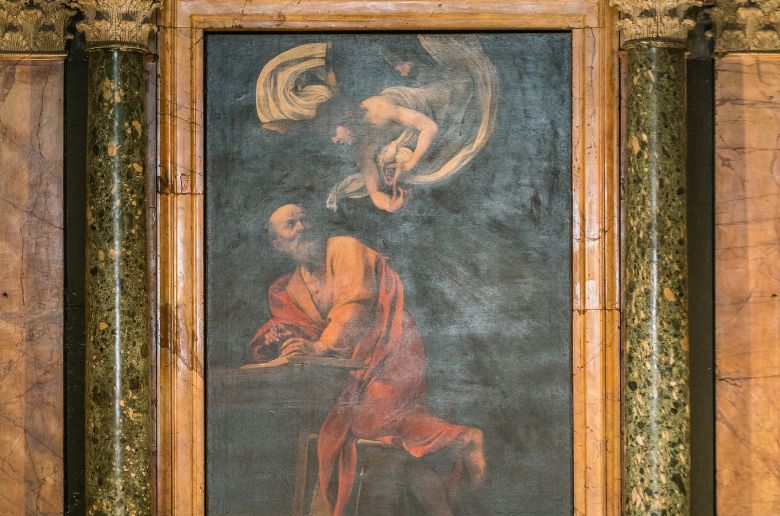
Between the Pantheon and Navona square it lies Saint Louis of the French, the church which serves as the national church of France in Rome. Built in the XVI century as a French landmark in the heart of Rome’s city center, Saint Louis of the French has a facade decorated with some of the most important French kings, although the treasures kept inside make the church a must-see place. Indeed, in one of the church’s chapels – the Contarelli chapel – are displayed 3 masterpieces by Caravaggio, one of the most famous Italian artist in the world: the Calling of Matthew, the Martyrdom of Saint Matthew and Saint Matthew and the Angel.
Basilica of Santa Maria sopra Minerva, a true architectural masterpiece
One of the few examples of Gothic architecture in Rome, the Basilica of Santa Maria sopra Minerva is located behind the Pantheon, in the heart of the rione Pigna, one of the city’s most charming districts. The basilica is famous for the elephant statue with an obelisk standing in front of it. Its Romanesque-Gothic façade, rose window above the entrance, and beautiful star-painted ceiling make it a true architectural masterpiece. Inside, the church houses the tomb of St. Catherine of Siena and Fra Angelico, along with numerous artistic treasures, including Michelangelo’s statue Christ the Redeemer.
Saint Ignatius of Loyola church, not just an Instagram picture
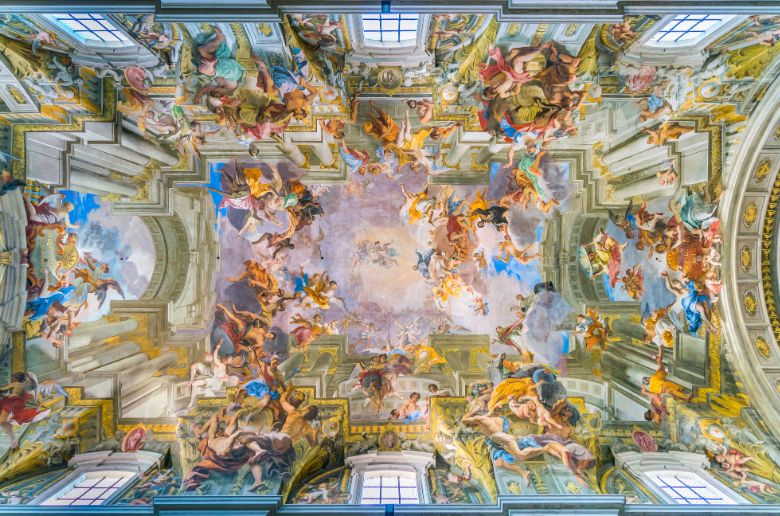
Located in the Campus Martius district, Saint Ignatius of Loyola is the most “social” church in Rome and a prime example of Baroque architecture and art. It is particularly famous for its stunning trompe-l’œil ceiling frescoes painted by Andrea Pozzo, which create an incredible illusion of a vast, three-dimensional space. Every day, hundreds of tourists wait in line to take the perfect Instagram photo.
But there is a way to avoid wasting time in line for a selfie: simply look up and admire the optical illusion. In fact, there are two illusions (we talked about it here), and Andrea Pozzo’s painted “dome” is a hidden gem that we suggest you to discover during an unconventional tour of Rome.