Follow our ultimate guide to discover the best districts in Rome for street art lovers
Rome is not just an ancient city: it’s a living canvas where towering murals tell new stories, reflecting modern struggles and local history. Indeed Rome’s street art scene offers a powerful counterpoint to its ancient history and during a vacation in the Eternal City it is possible to admire not only the ancient ruins but also a side of Rome that is vibrant, contemporary, and full of raw, unbridled creativity.
Forget the tourist crowds for a day and journey to the local neighborhoods where former industrial walls and public housing blocks have been transformed into magnificent, open-air art galleries and enjoy the best five Rome districts to discover the Roman street art essence. These places are the undisputed heart of Rome’s urban art scene, each offering a distinct flavor of history, community, and world-class murals by both Italian and international artists.
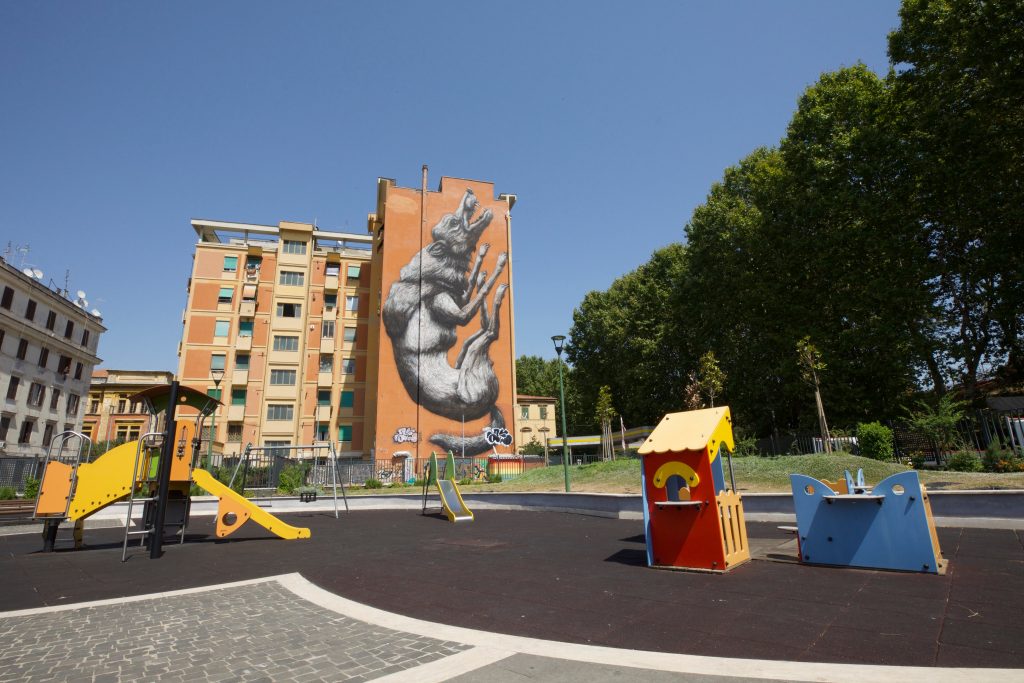
Ostiense: the industrial canvas of Rome’s street art
Ostiense is arguably the most famous and well-established street art hub in Rome. Once a bustling industrial area, its massive factory walls and silo buildings have been legally transformed into huge canvases.
Here, you’ll find over 30 spectacular murals. Don’t miss the monumental work by Blu on Via Ostiense, or the enormous “Jumping Wolf” by Belgian artist Roa on Via Galvani. Keep an eye out for the incredible “ecological mural” by Iena Cruz on Via del Porto Fluviale, painted with air-purifying, eco-sustainable paint, a powerful statement on art and urban life.
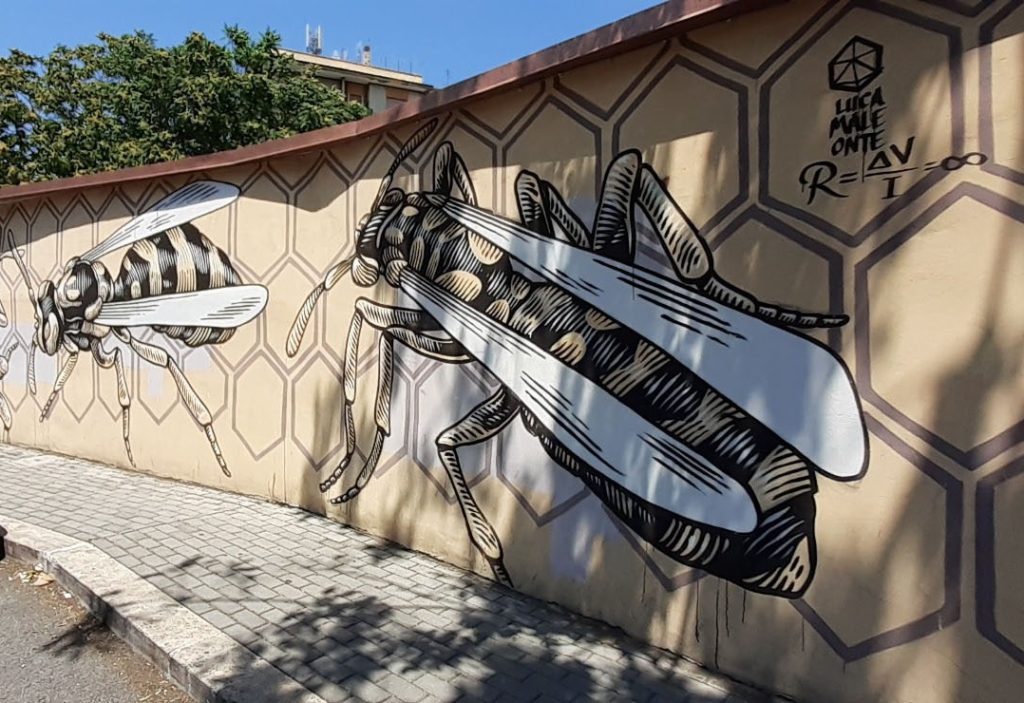
Quadraro: the wasp’s nest museum
Tucked away in the southeast, Quadraro is home to M.U.Ro (Museo Urban di Roma), a visionary open-air museum project founded by artist David “Diavù” Vecchiato in 2010. This working-class neighborhood, historically nicknamed “The Wasp’s Nest” for its fierce anti-Fascist resistance during the Second World War has murals that often reflect its profound history.
Look for Lucamaleonte’s Nido di Vespe (Wasp Nest) and works by international stars like American artist Ron English. The area has a charming, village-like atmosphere, making it a truly unique place to stroll and discover art interwoven with local life.
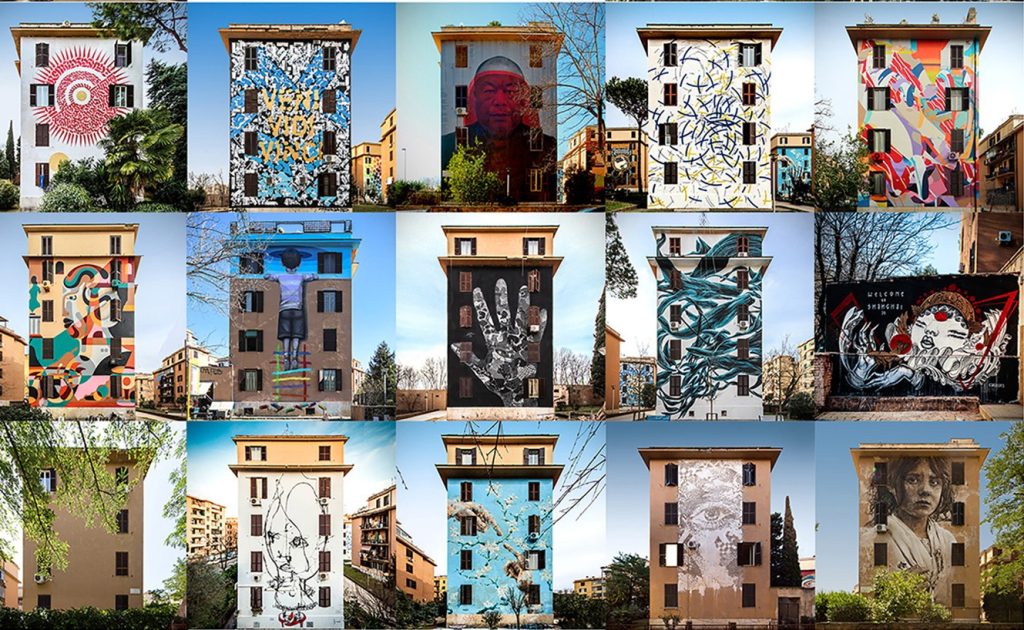
Tor Marancia: the condominium museum
In 2015, the Tor Marancia district saw an extraordinary transformation with the “Big City Life” project. Twenty international artists created 22 monumental murals across the facades of public housing buildings. This is perhaps Rome’s most striking example of art as social requalification. It’s a true “condominium museum” where residents literally live inside works of art.
Look for the massive portrait Il peso della storia (The Weight of History) by German artist Hendrik Beikirch and the colorful works by artists like Seth and Jaz.
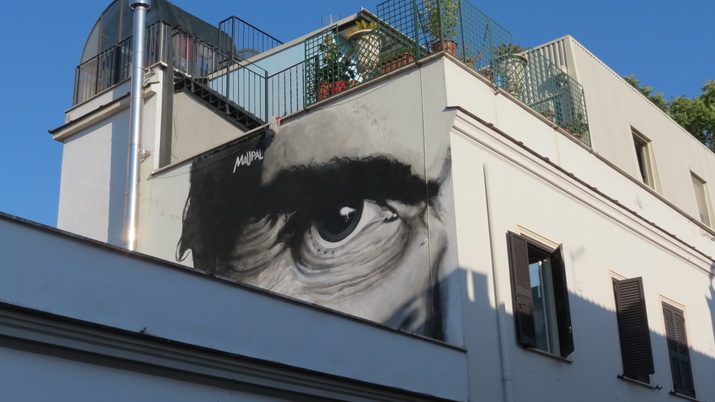
Pigneto: the bohemian vibe
The trendy and bohemian district of Pigneto, known for its vibrant nightlife, cafes, and historic association with filmmaker Pier Paolo Pasolini, is a mecca for smaller-scale street art and stencil graffiti. It is sometimes referred to as the “home of stencil” in Rome, thanks in part to the influence of artists like Sten & Lex.
You’ll find a strong collection of works dedicated to Pasolini, as well as the signature feminine figures of Roman artist Alice Pasquini, whose poetic works appear on many neighborhood walls. Artists weave Pigneto’s art into its alternative, energetic streetscape.
Tufello: homage to Rome’s history and culture
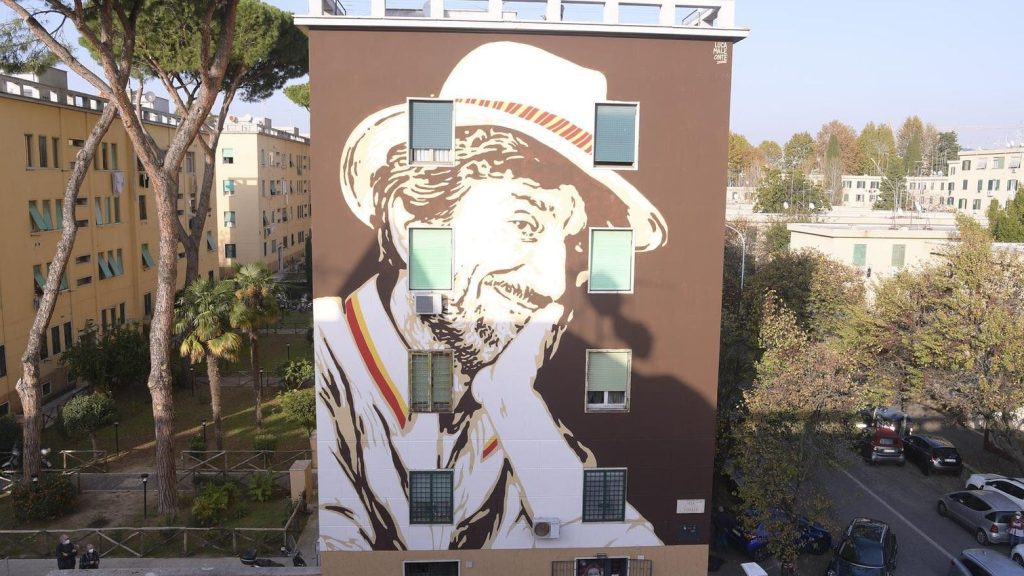
While perhaps less tourist-centric than others, Tufello holds a powerful collection of murals, many of which pay tribute to local Roman culture, political history, and social issues. One of the most famous pieces is the towering, 15-meter-high tribute to beloved Italian actor Gigi Proietti by Lucamaleonte on Via Tonale.
You can also find politically charged pieces by artists like Jorit (including one for Valerio Verbano and another for Bobby Sands) and a powerful pixel-art mural promoting an anti-homophobia message near the Jonio Metro station. Tufello’s art is deeply rooted in its community identity and it’s reflected the true essence of Rome’s street art.