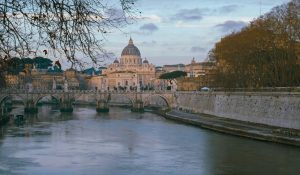
Rome is worldwide known for the famous legend of its origins with Romolus, Remus, the she-wolf and the Tiber river which it has been crossing the Eternal City since its foundation in 753 B.C.
The Tiber’s strength lies in its blend of ancient history and newly developed recreation and visiting this river isn’t just seeing Rome: it’s experiencing the legendary river that made the city possible. Far more than just a waterway, the Tiber is Rome’s historical backbone, a vibrant recreational hub, and an open-air museum—ready to be explored from a whole new perspective during a vacation in the Eternal City.
The Tiber: a unique river in the history
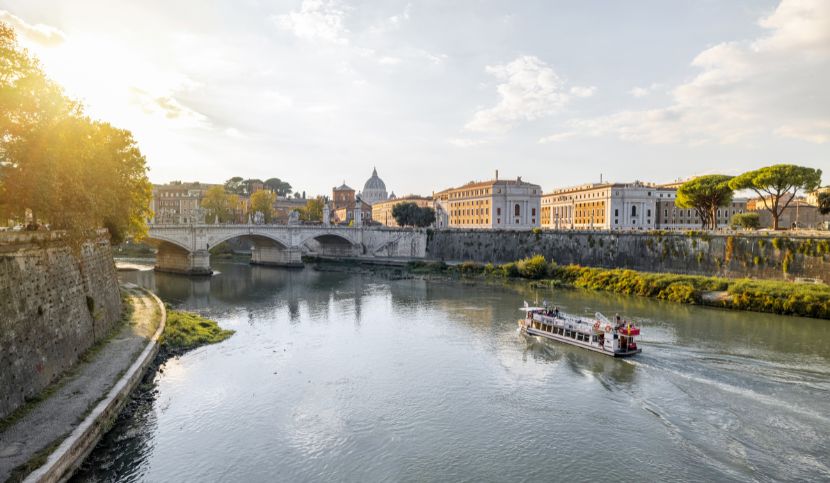
While the Seine in Paris and the Thames in London are often celebrated for their broad, highly integrated urban landscapes, the Tiber offers a distinctive, raw connection to its city’s mythic past. Shorter and less commercially navigable in the historic center than its counterparts, the Tiber’s character is defined by its deep, high stone embankments (built after severe floods in the 19th century).
This gives it a sense of separation from the city above, making the descent to the river a genuine discovery. Its history is tied directly to the founding myths of Rome and its an unmissable place to visit in Rome. In this ultime guide you will find 5 things to know and explore to enjoy the legendary Rome’s river. Let’s find out together!
Iconic bridges and riverside pathways
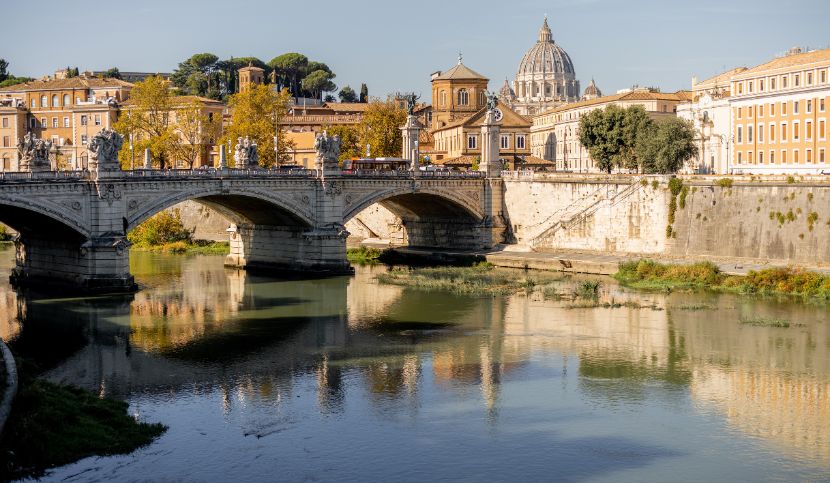
The bridges spanning the Tiber are spectacular chapters in Rome’s 2,700-year history. They are not merely crossings, but monuments in themselves. Leading directly to the imposing Castel Sant’Angelo, Ponte Sant’Angelo is arguably the most recognizable. Originally the ancient Pons Aelius, it is now famed for its ten exquisite Baroque angels sculpted by pupils of Gian Lorenzo Bernini, creating a dramatic, heavenly procession over the water. For a truly ancient experience, seek out Ponte Fabricio (Pons Fabricius), built in 62 BC and the oldest bridge in Rome still in use, connecting the mainland to the charming Tiber Island (Isola Tiberina).
Cycle Rome’s green highway
Beneath the towering 19th-century embankments (Lungotevere), a network of cycle paths offers a car-free, peaceful way to traverse the city. This riverside track, stretching for approximately 35 kilometers, and it connects the Eternal City from the Vatican and the northern Flaminio district to the south, passing under picturesque bridges like Ponte Sant’Angelo and offering spectacular views of Castel Sant’Angelo, St. Peter’s Basilica, and the skyline of Trastevere. This cycle paths is Rome’s “green highway,” perfect for a morning jog or a relaxed afternoon bike ride away from the city bustle.
Summer events and new urban parks
The Tiber truly comes alive during the warmer months, transforming its banks into a dynamic social space. Every summer, the banks of the Tiber—especially the stretch between Ponte Sisto and Ponte Sublicio—host the massive street festival, Lungo il Tevere known as Rome’s Summer Festival. The riverbanks below the street level are illuminated with pop-up bars, restaurants, craft stalls, and live music, making it the ultimate spot for a warm Roman evening.
The new Tiber’s riverside oasis
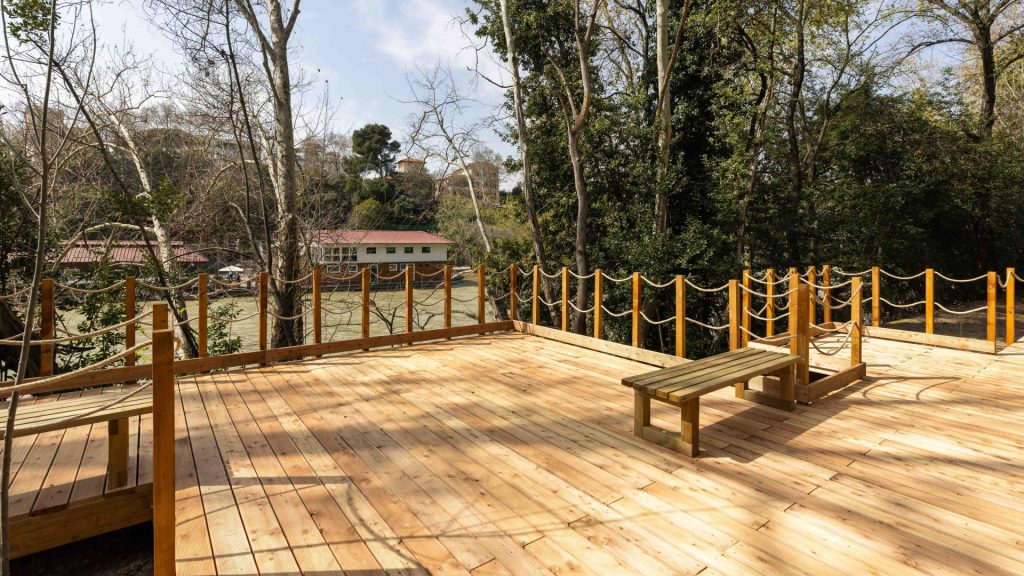
Rome is actively embracing its river with the creation of new public green spaces. The recently opened 5 riverfront parks as part of a broader vision to develop the Tiber into a linear urban park.
These spots offer citizens and tourists alike a tranquil, ecologically revitalized space to relax and reconnect with nature while discovering Tiber’s biodiversity, relax and stop to contemplate nature on a bench, among wide pathways and evocative panoramic terraces immersed in greenery.
Boat tours on the Tiber
A boat trip on the Tiber provides a unique, stress-free sightseeing experience. Hop-on, hop-off services allow you to admire landmarks like St. Peter’s Basilica and Castel Sant’Angelo from a completely new angle. For a romantic treat, evening cruises often include an aperitivo (drinks and snacks), letting you soak in the magic of the illuminated historic center as you glide past.
The Tiber joins the UNESCO world heritage
In a significant move recognizing the river’s immense cultural importance, the stretch of the Tiber that runs through Rome’s historic centre—including the Tiber Island and the famous riverbanks (Lungotevere)—has been formally included as a distinctive attribute of the existing UNESCO World Heritage Site (the Historic Centre of Rome).
This move underscores the river’s centuries-old symbiotic relationship with the Eternal City and highlights the need for its continued preservation and enhancement, ensuring its beauty and archaeological value are protected for future generations.