Taste with us the Rome’s must-try dishes and discover the cuisine of the Eternal City in a mix of simplicity and savour. Rome is a city that engages all the senses, and for many travelers, the most unforgettable experiences during a vacation in Rome are found not in museums, but at the dinner table.
While our guide to Rome’s street food shows the city’s vibrant quick bites, dining at a proper table reveals another side of Roman cuisine that truly enchants the palate. The food in the Eternal City is a testament to tradition, simplicity, and the power of a few perfect ingredients. Forget complicated menus and fussy presentations; the best food in Rome is honest, soulful, and deeply satisfying. This is a journey through the flavors that define the Eternal City, a culinary roadmap to five essential dishes that tell the story of Roman cuisine. Let’s taste them together!
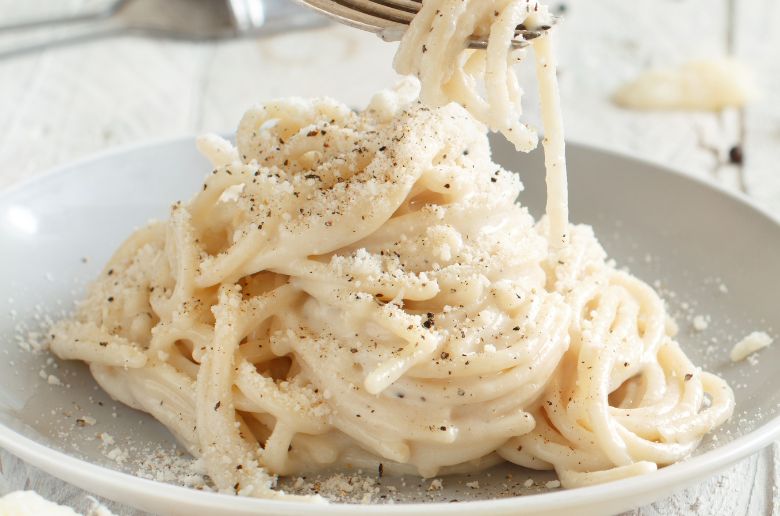
Rome’s must-try dishes: Cacio e Pepe, the creamy, iconic Roman pasta
You can’t talk about Roman food without starting with pasta, and there are three dishes which are the pillars of the city’s culinary identity. First, there’s Cacio e Pepe, a masterpiece of minimalist perfection. Made with just three ingredients—pasta, pecorino romano cheese, and black pepper—this dish is all about technique.
The magic lies in creating a creamy, emulsified sauce by tossing hot pasta with the cheese and pepper, using a little of the starchy pasta water to bind it all together. And the result is a simple yet profoundly flavorful experience that is a benchmark of a true Roman trattoria.
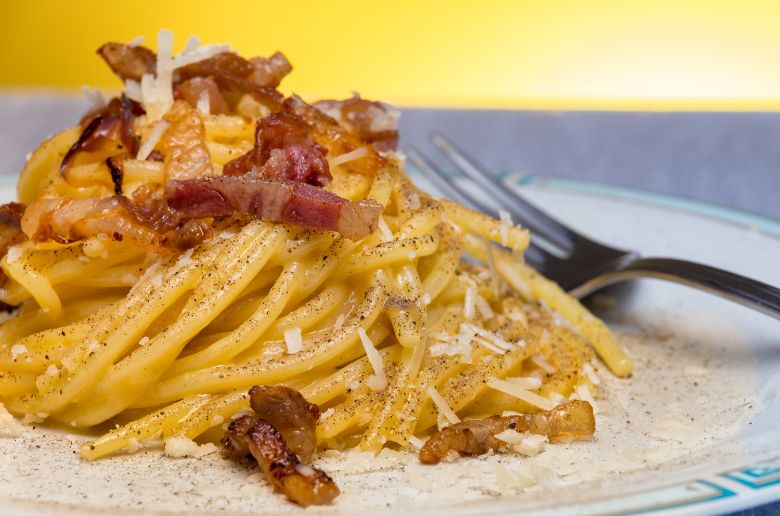
Carbonara: authentic Roman pasta with guanciale and pecorino
The second famous pasta sauce in Rome is the famous Carbonara, a dish often misunderstood outside of Italy. A true Roman Carbonara contains only guanciale (cured pork cheek), eggs, Pecorino Romano cheese, and black pepper. There is no cream, no onion, and no garlic.
The hot pasta is tossed with the raw egg and cheese mixture, cooking the egg just enough to create a rich, velvety sauce that clings to every strand. The crispy, rendered guanciale adds a salty, savory crunch that makes this dish an unforgettable symphony of textures and flavors.
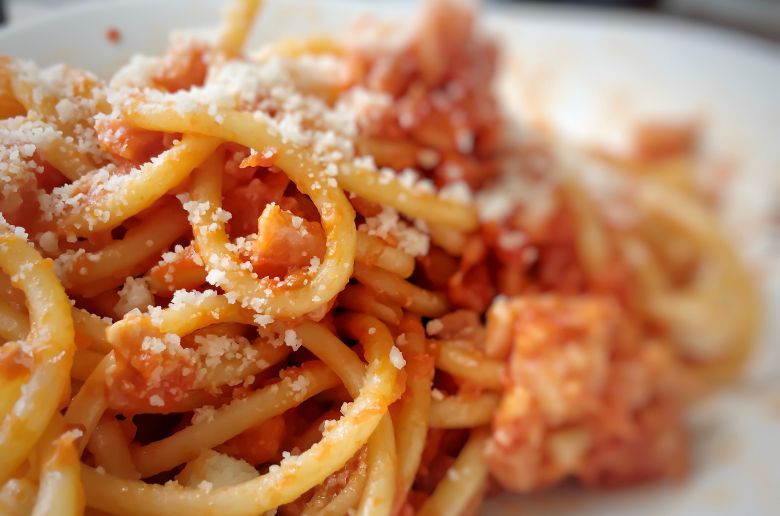
Amatriciana: Rome’s rustic tomato & guanciale pasta
The third famous pasta in Rome is the Amatriciana, a slightly more rustic and robust cousin to Carbonara. Originally from the town of Amatrice, it was adopted and perfected by Romans. This hearty sauce is built on a base of sautéed guanciale, simmered with tomatoes and a touch of red pepper flakes for a spicy kick.
Like Carbonara, Amatriciana has a generous dusting of Pecorino Romano. The sauce is a beautiful balance of sweet, salty, and spicy notes, making it a perfect example of how Roman cooks elevate humble ingredients to create something truly special.
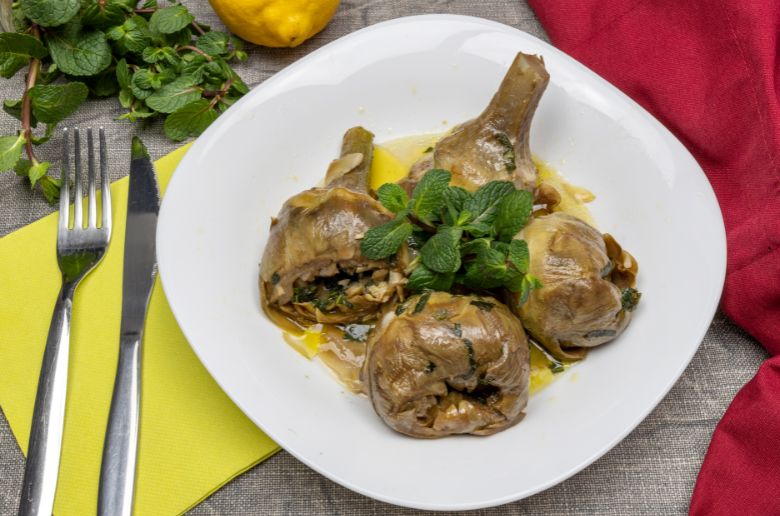
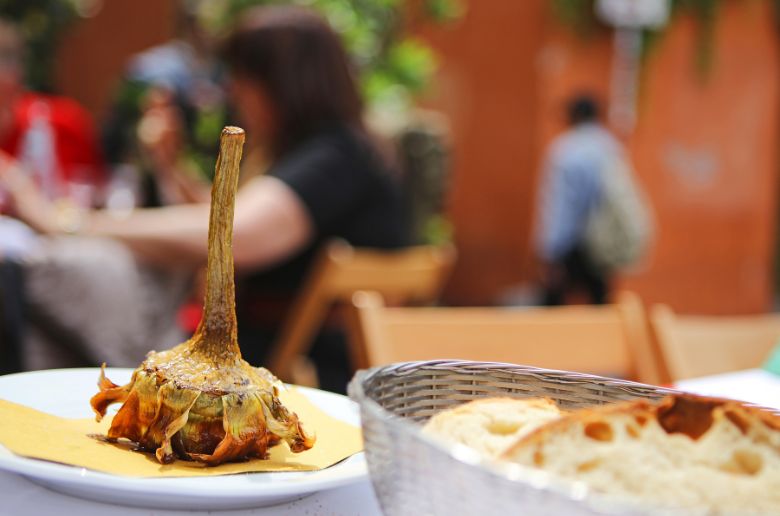
Roman artichokes: alla Romana and alla Giudia specialties
Beyond pasta, Rome offers a wealth of other culinary delights. A true seasonal specialty is Carciofi alla Romana, or Roman-style artichokes. These are not just any artichokes; the Roman artichoke, or Carciofo Romanesco, is a specific, thornless variety prized for its tenderness.
They are trimmed, stuffed with a mixture of mint and garlic, and braised slowly in olive oil and white wine until they are incredibly soft and tender. The result is a delicate, earthy dish that melts in your mouth, a celebration of simple, seasonal cooking at its finest.
The Carciofi alla Giudia are crispy, deep-fried artichokes that bloom like golden flowers on the plate. This artichokes recipe in typical of Rome’s Jewish Quarter, the flower is crunchy on the outside, tender on the inside, and completely addictive. Only available when artichokes are in season (typically late fall through spring), these dishes showcase Rome’s culinary diversity and centuries-old Jewish influence.
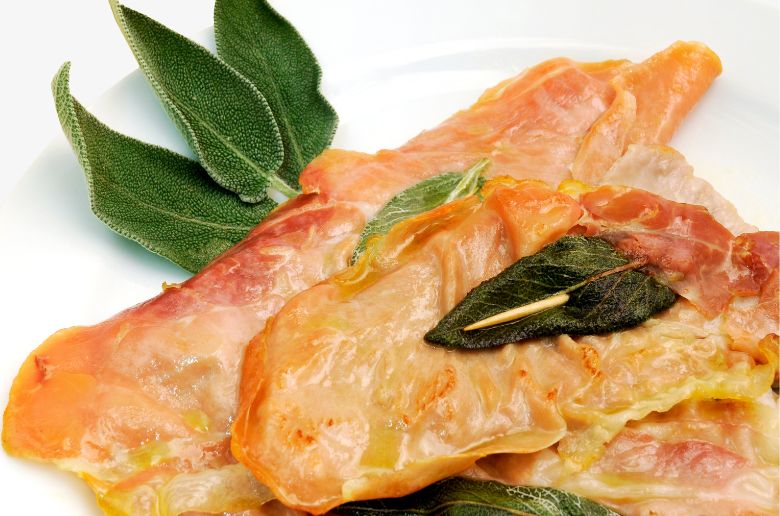
Saltimbocca alla Romana: tender veal with prosciutto & sage
For a main course, you must try Saltimbocca alla Romana. The name literally means “jumps in the mouth” and for good reason—this dish is so delicious it practically leaps onto your plate. It’s a quick and elegant dish made with thin slices of veal, topped with prosciutto and a fresh sage leaf.
Saltimbocca alla Romana has only the three components: pan-fried in butter and white wine, creating a wonderfully savory and aromatic sauce. The crispy prosciutto, tender veal, and fragrant sage create a perfect harmony of flavors. Definitely it’s a dish that exemplifies Roman cuisine’s ability to be both simple and sophisticated.