The Colosseum in Rome isn’t just a ruin: it’s a monumental echo of ancient history, where gladiators fought and emperors reigned.
As the largest amphitheater ever built, the former Flavian Amphitheater remains one of the world’s most recognizable landmarks. It is surely one of the most famous Roman symbols in the world and of course one of the unmissable places to visit during a vacation in Rome.
Here’s you will find our Colosseum Travel Guide about everything you need to know to visit the Flavian Amphitheater and to make your experience to this bucket-list archaeological marvel unforgettable.
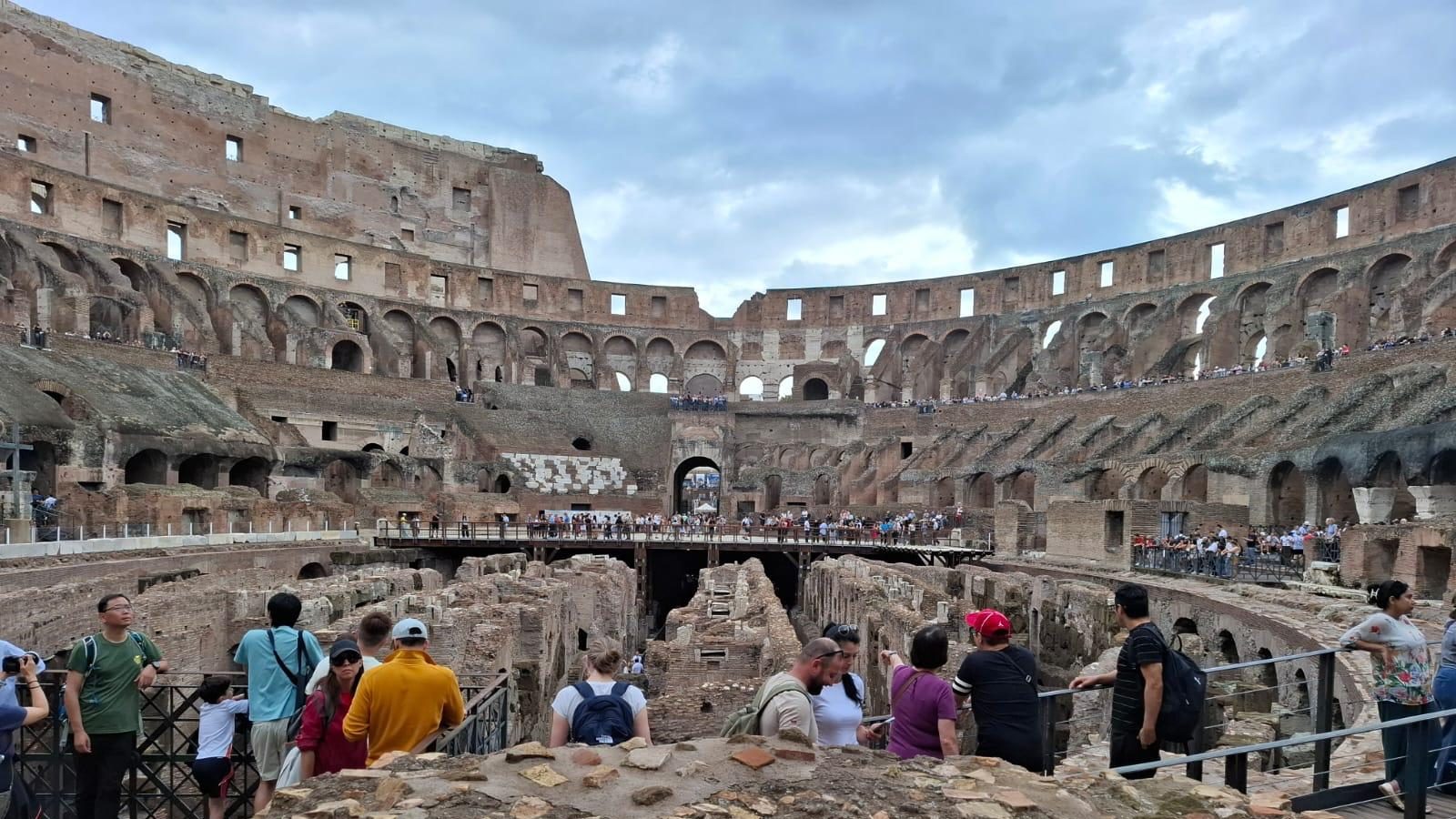
Essential history about the Colosseum
Before your visit, a few facts will enrich your experience. The Colosseum was built between 70 and 80 AD by the emperors of the Flavian dynasty—Vespasian, Titus, and Domitian—with funds largely sourced from the spoils of the First Jewish-Roman War. Capable of seating 50,000 to 80,000 spectators, it was the ultimate venue for public spectacles: gladiator contests, animal hunts known as venationes, public executions, and even mock sea battles or naumachiae.
Its original name was the Flavian Amphitheater, but it acquired the nickname “Colosseum” from the colossal statue of Emperor Nero that once stood nearby. Today, the enduring stone arches and subterranean tunnels (the Hypogeum) speak to the incredible engineering prowess of ancient Rome.
Opening hours and best time to visit the Colosseum
The Colosseum is open daily, year-round, except for January 1st and December 25th. Its closing time is dependent on sunset, so hours change seasonally: in winter at 4:30 pm, in autumn at 6:30 pm, in spring and summer at 7:15 pm. The last entry is always one hour before the advertised closing time.
To beat the massive crowds, aim to be at the gates right when they open at 8:30 AM or an hour before closing. Visiting midweek, if possible, also helps. Remember, your standard ticket grants you access to the neighboring Roman Forum and Palatine Hill as well, which are also worth visiting early.
For a unique experience, the Colosseum can also be visited in the evening, from May to November, when special night tours allow you to explore the monument in a magical atmosphere.
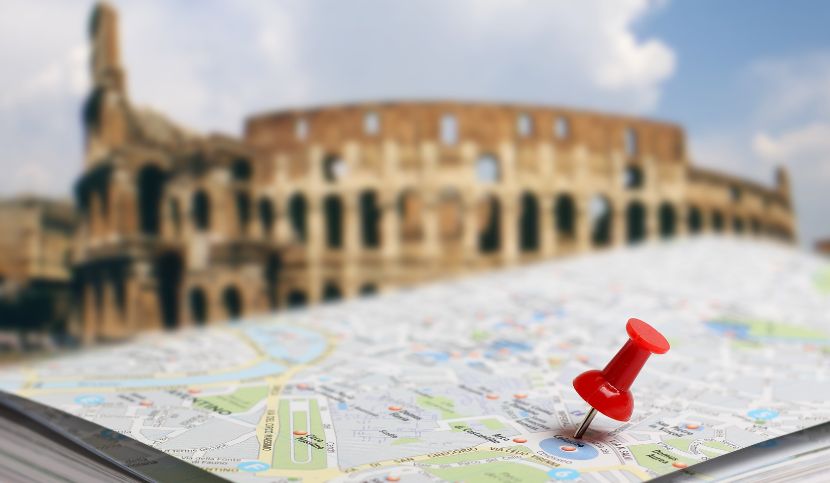
How to reach the Colosseum
The best way to reach the Colosseum Colosseo depends on your current location in Rome, but the most common and efficient method is by public transport, especially the Metro line B, the stop is simply called Colosseo and this line connects to major areas like Termini Station (Rome’s main transport hub and Piramide/Ostiense).
You can also reach the Colosseum by tram line 3 and line 8 both stop near the Colosseum and by bus thanks to multiple bus lines stop near the Colosseum. A taxi is the most direct way, but it can be more expensive and slower due to traffic, especially during peak hours. There is a taxi stand near the monument. Moreover, if you are already in the city center, walking is a great option, in fact the Colosseum is about a 20-25 minute walk from Termini Station or a 15 minute walk from Piazza Venezia.
Colosseum ticket options: arena, underground, attic, and combo passes
Our suggestion is not to buy tickets at the gate: queues are notoriously long, and it is mandatory to book a timed-entry slot in advance. Security checks take time—every visitor must go through metal detectors, and backpacks are inspected—so arriving early is recommended to maximize your visit.
All tickets are nominative: it is possible to change the name of the ticket holder only once and no later than 24:00 on the seventh day before the scheduled visit.
Arena, underground, and attic access are limited to special tickets, so if you want the full Colosseum experience, plan ahead and book these tickets well in advance. All tickets are valid for 24 hours from the first entry and include access to the Roman Forum and Palatine Hill.
The main ticket options are:
- Colosseum, Roman Forum, and Palatine – Standard ticket valid for 24 hours. Grants one timed entry to the Colosseum’s first and second levels, plus access to the Roman Forum and Palatine Hill
- Arena only – Includes a single 20-minute access to the reconstructed Arena Floor (where the gladiators fought!), plus access to the Roman Forum and Palatine Hill.
- Underground & Arena – Grants access to the Hypogeum (Colosseum’s underground tunnels and cages), the Arena Floor, and the Roman Forum and Palatine Hill.
- Attic access – Allows entry to the uppermost level (third tier) of the Colosseum for panoramic views, along with Roman Forum and Palatine Hill.
- Full Experience: Underground, Arena & Attic – Combines access to all restricted areas (Hypogeum, Arena Floor, Attic) plus the Roman Forum and Palatine Hill. These tickets are the most sought-after and sell out quickly.
Confused by Colosseum ticket options? Check out our Instagram reel for a quick visual guide!
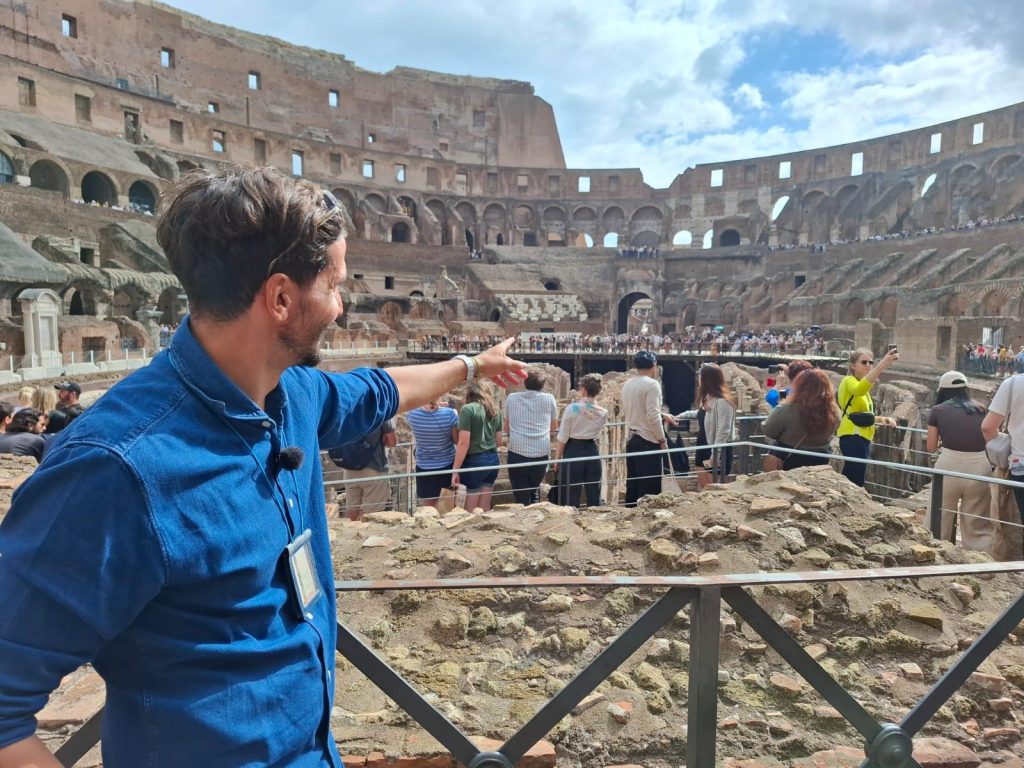
Tours to visit the Colosseum
Visiting the Colosseum on your own can be impressive, but to truly immerse yourself in its grandeur, history, and hidden secrets, a tour led by an official guide is the best choice. Only with an expert guide can you uncover hidden details, fully understand the life of the gladiators, and experience the monument in its entirety.
VISIT THE COLOSSEUM WITH ALICEINWONDEROME
Official guides have access to exclusive areas and can enrich your visit with fascinating stories and insights that make the Colosseum even more extraordinary.
Whether you choose a guided tour or an official audio guide, booking through official channels ensures a smooth experience and access to the most remarkable areas of the Colosseum.