From the Colosseum and Roman Forum to the Vatican Museums and St. Peter’s Basilica, discover with us 10 unmissable places to visit during your vacation in Rome.
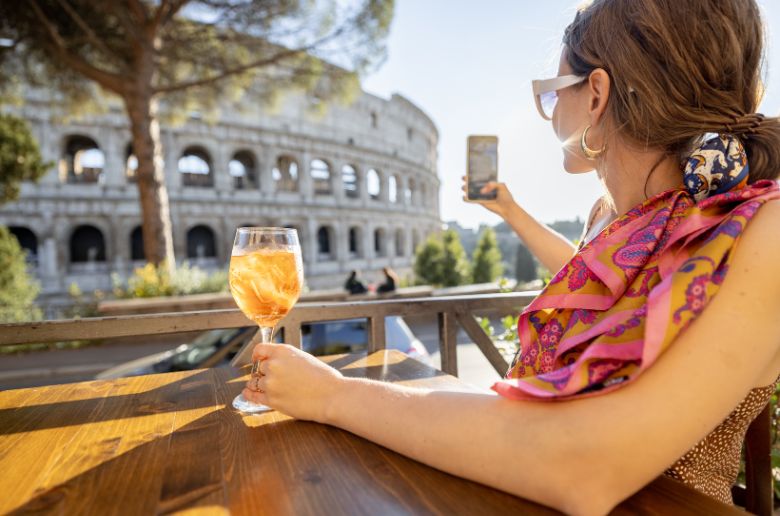
During a vacation in Rome, there are some places you simply cannot miss. Many of them are globally renowned: the Colosseum, the Spanish Steps, the Trevi Fountain, and St. Peter’s Basilica. These iconic monuments are so remarkable that it would be unthinkable not to visit them while on holiday in the Eternal City. With over 27 centuries of history, Rome is home to an extraordinary number of landmarks, making it nearly impossible to list them all. However, here are 10 must-see sites that should definitely be on your itinerary during your next trip to Rome.
10 unmissable places to visit in Rome: Colosseum and Roman Forum
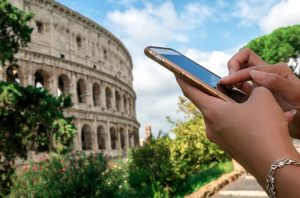
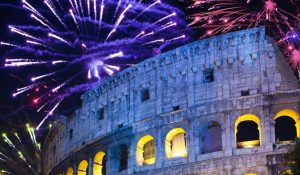
The Colosseum, or Flavian Amphitheater, is the symbol of Rome and one of the Seven Wonders of the Modern World. With its two thousand years of history, the Colosseum remains a testament to the grandeur of ancient Rome. Once a stage for gladiatorial battles and built on the grounds of Nero’s Domus Aurea, the Colosseum is an essential stop on any visit to Rome. Exploring this iconic amphitheater includes a chance to view its underground chambers, where gladiators and wild animals were held before their performances.
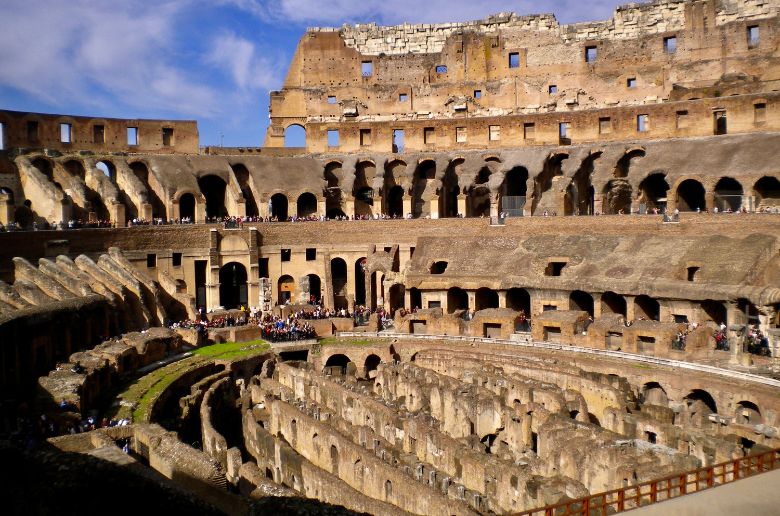
The Colosseum is part of the archaeological park located in the heart of the Eternal City, which also includes the Palatine Hill, Nero’s Domus Aurea, and the Roman Forum. The Forum, the most important and sacred site in ancient Roman history, is a stunning area of ruins with temples dedicated to legendary emperors (like those of Vespasian and Titus), majestic arches (such as the Arch of Constantine and the Arch of Septimius Severus), and basilicas like the Basilica of Maxentius. Walking through the Roman Forum is an unforgettable experience, offering the unique feeling of strolling through history.
St. Peter’s Basilica and the Vatican Museums
As the spiritual center of Christianity and the holiest site for over a billion faithful, St. Peter’s Basilica and the Vatican Museums are unmissable destinations during a vacation in Rome. Situated within Vatican City, the smallest state in the world and located in the heart of Rome, St. Peter’s Basilica is a treasure trove of masterpieces. Its massive square and iconic colonnade were designed by Gian Lorenzo Bernini, who also created the bronze canopy inside the basilica. The interior is adorned with magnificent frescoes and sculptures, including Michelangelo’s celebrated Pietà. Michelangelo also designed the stunning painted dome, which is one of the highlights of any visit.
Vatican City is also home to one of the richest and most-visited museums in the world: the Vatican Museums. Housing a vast collection of art, this museum is an essential stop during any trip to Rome. Its galleries showcase works by legendary artists such as Giotto, Fra Angelico, Perugino, Pinturicchio, Titian, Caravaggio, Guercino, and modern masters like Boccioni, Balla, De Chirico, and Guttuso. Highlights include the Raphael Rooms, featuring the iconic School of Athens, and Michelangelo’s breathtaking Sistine Chapel ceiling and The Last Judgment.
Villa Borghese
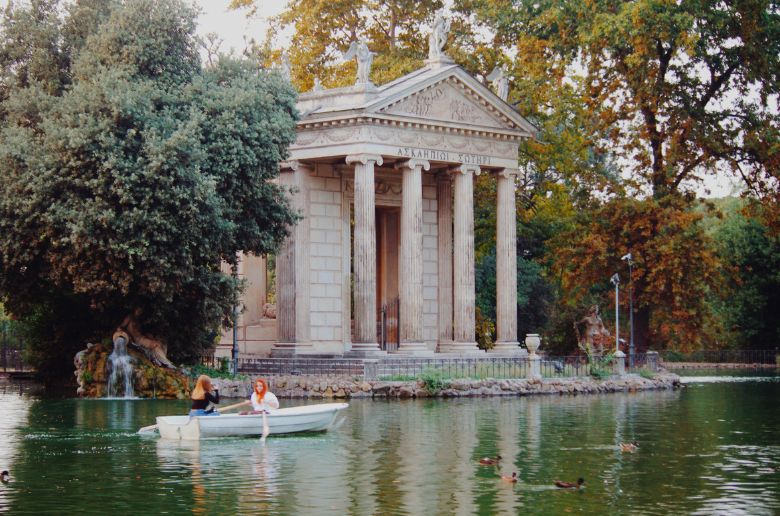
The largest park in central Rome, Villa Borghese is a green oasis that features museums, a zoo, a lake, and a breathtaking terrace offering panoramic views of Rome. This park is a favorite among locals and an ideal spot to explore, especially on sunny days. Villa Borghese boasts many attractions, including the beautiful Pincio Terrace, which offers stunning views of Rome’s skyline, dotted with domes and bell towers. Another highlight is the Borghese Gallery, one of Rome’s most renowned museums, housing masterpieces by Caravaggio, Raphael, Bernini, and Canova.With over 80 hectares of space, Villa Borghese offers plenty to explore, from its scenic lake to the racecourse and zoological garden. Golf cart tour is a fun and efficient way to discover the park while saving energy for other adventures in Rome.
Castel Sant’Angelo
The Mausoleum of HadrianThe Mausoleum of Hadrian, also known worldwide as Castel Sant’Angelo, is a fascinating castle located on the right bank of the Tiber River, close to Vatican City. Commissioned by Emperor Hadrian in 135 A.D., it features a massive cylindrical structure atop a square base. Castel Sant’Angelo (named after the angel-shaped statue at the top of the castle) was originally built as a mausoleum but was later transformed into a fortress, a papal residence, and, at times, a prison. Today, Castel Sant’Angelo is a captivating museum where visitors can explore its rooms, prisons, and papal apartments, as well as enjoy stunning views of Rome from the rooftop terrace.
Trevi Fountain
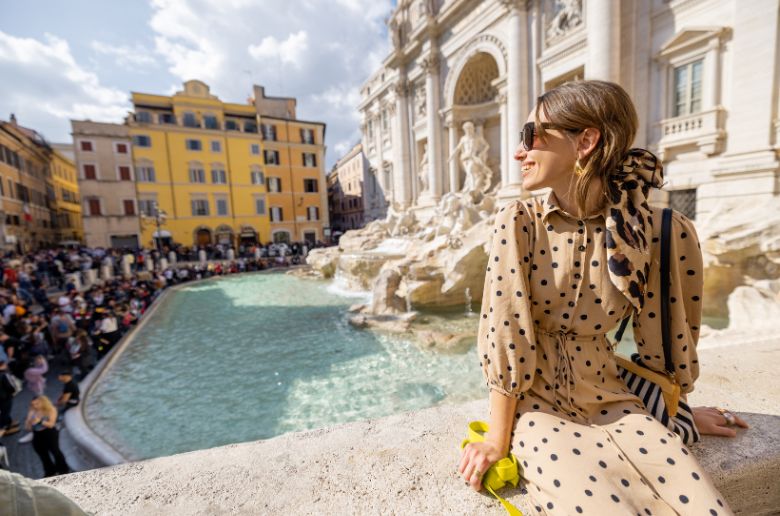
One of Rome’s most iconic landmarks, the breathtaking Trevi Fountain, is located in the heart of the old city center. Recently renovated, its stunning statues, including Oceanus, the god of the sea, now shine brightly after meticulous restoration work. Designed by Nicola Salvi in 1762, the Trevi Fountain is the largest in Rome and internationally famous, thanks in part to Federico Fellini’s movie La Dolce Vita. Throwing a coin into the fountain is a must-do during a visit to Rome; according to popular legend, it guarantees a return to the Eternal City.
Pantheon
One of the most remarkable temples of Ancient Rome and among the best-preserved, the Pantheon is a must-see attraction in the city center, drawing millions of visitors each year. The Pantheon is renowned for its massive dome, which remains the largest unreinforced concrete dome in the world, and its oculus, a circular opening at the top that allows sunlight to illuminate the interior. Converted into a Christian church in the 7th century, the Pantheon has been in continuous use throughout its history and serves as the burial site for several prominent figures, including two former Italian kings and the artist Raphael.
Navona Square
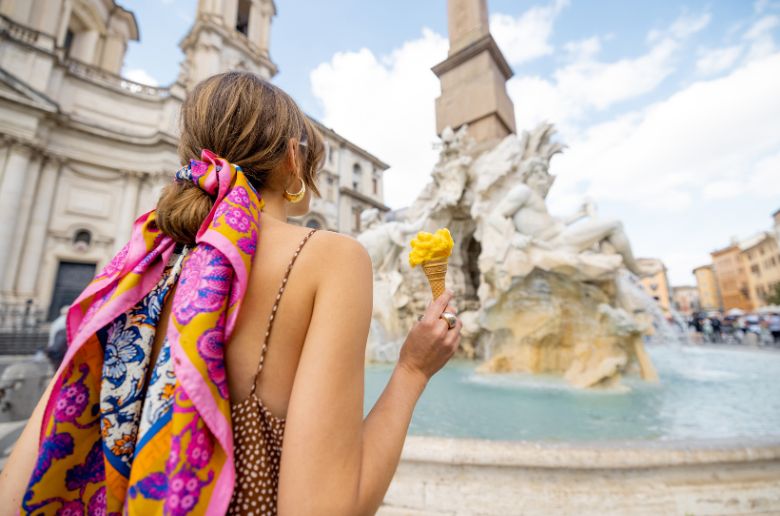
Situated in the heart of Rome, near other iconic landmarks such as the Pantheon, Navona Square is built on the site of Domitian’s Stadium, and its oblong shape reflects the layout of the ancient structure. The square is famous for its vibrant atmosphere and three magnificent fountains: the Fountain of Neptune, the Fountain of the Moor, and Bernini’s masterpiece, the Fountain of the Four Rivers, which serves as the centerpiece (by the way, did you know that there is a fake on this fountain?). Navona Square is also home to baroque buildings, the most notable being the Church of Sant’Agnese in Agone, designed by architect Francesco Borromini.
Trastevere
Trastevere is a district that should not be missed during a vacation in Rome, as it captures the essence of the city’s historic and popular neighborhoods. This charming and lively area is known for its cobblestone streets, traditional taverns, and vibrant nightlife. In the evenings, Trastevere’s streets are bustling with people enjoying the many restaurants and bars, making it the perfect place to experience authentic Roman culture. While strolling through its streets, visitors can admire architectural gems such as the churches of San Francesco a Ripa, Santa Cecilia, and Santa Maria in Trastevere.
Spanish Steps
A symbol of Rome worldwide, the Spanish Steps are a must-see landmark during a vacation in the Eternal City. This monumental 18th-century staircase, located in the heart of Rome, connects Piazza di Spagna at the base to the Trinità dei Monti Church at the top. The 135 steps, designed by architects Francesco de Sanctis and Alessandro Specchi, feature a harmonious mix of straight flights, curves, vistas, and terraces. At the base of the steps lies the Barcaccia Fountain, created by Bernini. Although commissioned in the 18th century by the French diplomat Étienne Gueffier, the staircase is called “Spanish” because of the Spanish Embassy to the Holy See, which is located in Piazza di Spagna.
10 unmissable places to visit in Rome: Capitoline Square
Situated on one of the original hills of Ancient Rome, Capitoline Square is a historic site symbolizing Roman power and authority. The square was designed by the Renaissance genius Michelangelo Buonarroti in the 16th century, who created a symmetrical and harmonious space. At its center stands the Palazzo Senatorio, flanked by the Palazzo dei Conservatori and Palazzo Nuovo. On the left side of the square, the statue of the Capitoline She-Wolf recalls the legend of Romulus and Remus. Behind the square, a terrace overlooking the Roman Forum offers one of the most beautiful views of the city center, an unmissable destination during a vacation in Rome.